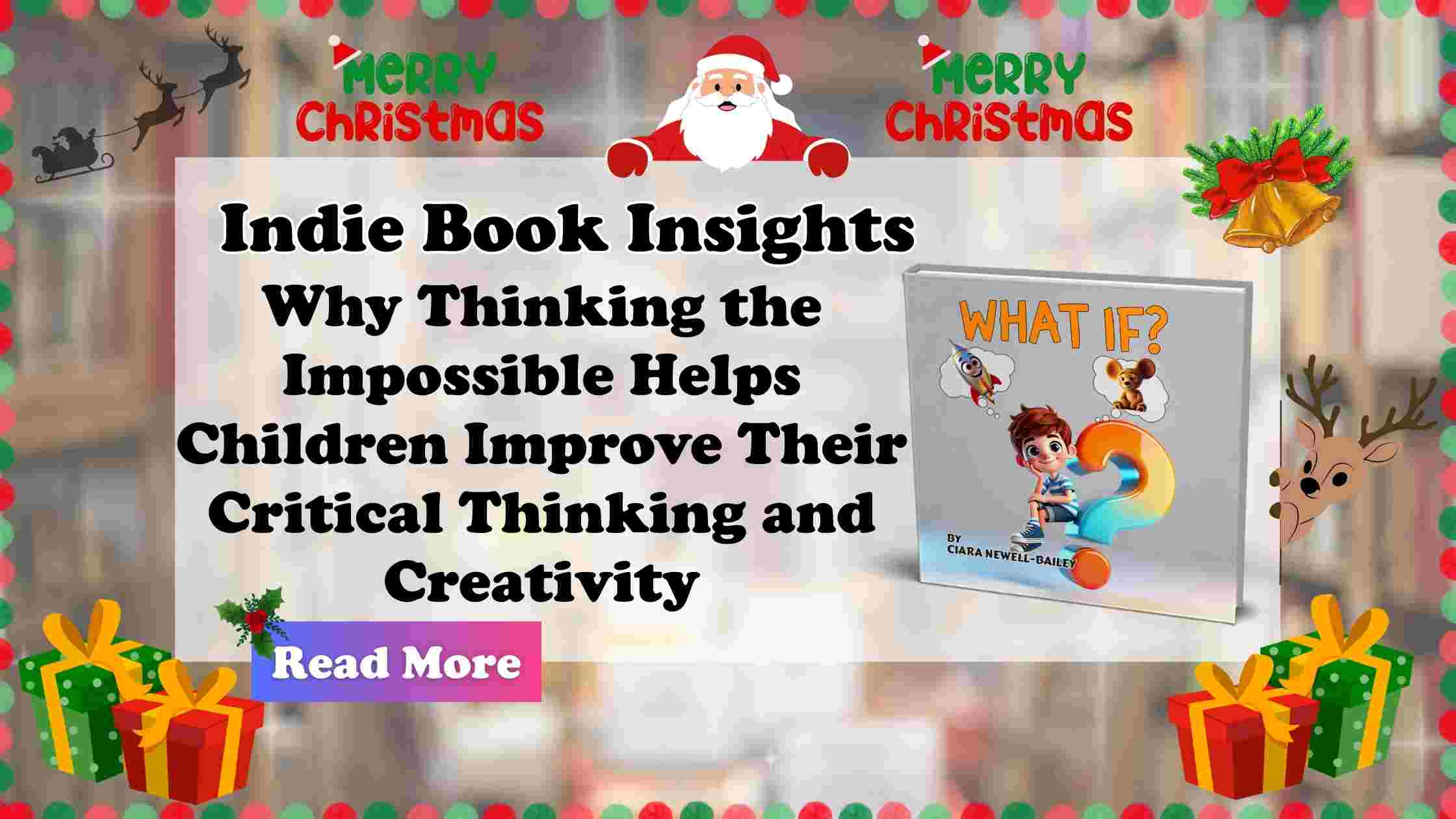
What if dogs could bake cakes? What if trees could dance? What if your bed could sing you a song at night?
For adults, these questions may seem like fun nonsense, but for children, they can be a gateway to comfort, confidence, and emotional understanding. Ciara Newell-Bailey’s picture book What If? celebrates this very magic. Through rhythm, rhyme, and imagination, it shows how asking “what if” can help children explore big feelings in small, safe ways.
When a child imagines something impossible, such as a talking teddy or a flying bicycle, they are not just playing. They are practising how to make sense of the world. According to the American Academy of Pediatrics, imaginative play is vital for emotional growth because it helps children express thoughts and worries they may not be able to explain in words (healthychildren.org). In make-believe, a child can explore fears indirectly. Pretending that a teddy can listen is another way of saying, “I need someone to hear me.” Imagining a bed that sings might say, “I want to feel safe at bedtime.”
This is where What If? shines. By gently allowing children to think freely and share openly, each page of this book poses a question that seems simple yet holds profound meaning. The repeating rhythm of “What if fruit could see?” and “Would you watch TV with a strawberry?” creates a pattern that comforts young readers while opening their minds to the joy of creativity. That rhythm matters, as studies show that repeated language and predictable phrasing help children relax and process emotions more easily during shared reading.
Imagination also helps children build emotional security by teaching control in safe spaces. When children create pretend worlds, they decide what happens next. They learn that even scary feelings can be explored and resolved. Psychologists from the University of Cambridge note that imaginative play allows children to practise problem-solving and gain mastery over uncertainty. This sense of control is vital for emotional balance.
Why is it good to think of the impossible? Because “impossible” thinking opens emotional doors. It shows children that there are many ways to look at the same situation. A child who wonders “What if trees could run?” is not just being silly; they are experimenting with perspective, cause, and empathy. Such thinking helps them understand that feelings can move and change too. When children learn that their imagination has no limits, they feel more confident facing the unknown in real life.
For parents and teachers, stories like What If? offer a special opportunity to connect. During bedtime reading, adults can follow up each question with gentle prompts: “What do you think your teddy would say?” or “What song would your bed sing?” These open conversations show children that their ideas are valued and their emotions accepted. They also turn reading into a two-way exchange, building trust and closeness.
Experts agree that playfulness is at the heart of resilience. UNICEF notes that creative play helps children cope with stress by turning fear into manageable stories and strengthening their sense of identity. When a child feels safe to imagine, they learn to trust both themselves and the world around them.
Ciara Newell-Bailey’s What If? captures this truth beautifully. It reminds us that imagination is more than fun; it is healing. It is how children make sense of feelings too big for words and turn worries into wonder.
So tonight, when you tuck your child into bed, try asking your own “what if” question. What if the moon could tell us stories? What if our dreams could paint the sky? You might be surprised how much calm, laughter, and closeness such questions can bring.
To discover more ways to spark creativity and connection, read Ciara Newell-Bailey’s charming children’s book What If?, a joyful invitation to dream, wonder, and explore the world through a child’s eyes.
This book is available on Amazon: https://www.amazon.com/dp/1968296352.