
Manufacturing is entering a new era, one where artificial intelligence and robotics are no longer experimental technologies but essential tools on the factory floor. From collaborative robots (co-bots) assembling products alongside employees to AI systems predicting equipment failures before they occur, manufacturers are embracing intelligent automation to improve productivity, reduce downtime and stay competitive in a rapidly evolving global market.
But while organizations are investing heavily in smarter machines, a crucial question often receives far less attention:
Are workers truly prepared for this transformation?
The conversation around AI in manufacturing typically focuses on efficiency, cost savings and innovation. Those benefits are undeniable. AI-powered systems can optimize production schedules, improve quality control, streamline supply chains and perform repetitive or hazardous tasks with remarkable precision. By reducing human exposure to dangerous environments, intelligent automation has the potential to create safer workplaces.
Yet every technological advancement introduces new forms of risk.
As humans increasingly work alongside AI-powered robots, the nature of workplace hazards is changing. Today’s manufacturing workforce must navigate challenges that extend beyond traditional concerns like machinery, noise and chemical exposure. Human-robot collaboration introduces new physical safety considerations, while AI-driven workflows can also create cognitive overload, increased performance pressure, uncertainty about changing job roles and anxiety surrounding automation.
These are not simply technical issues; they are human issues.
Traditional workplace safety programs were designed to manage physical hazards. They are less equipped to address the psychological, ethical and organizational challenges created by intelligent technologies. Questions about trust, transparency, algorithmic decision-making and worker autonomy are becoming just as important as machine guarding and lockout/tagout procedures.
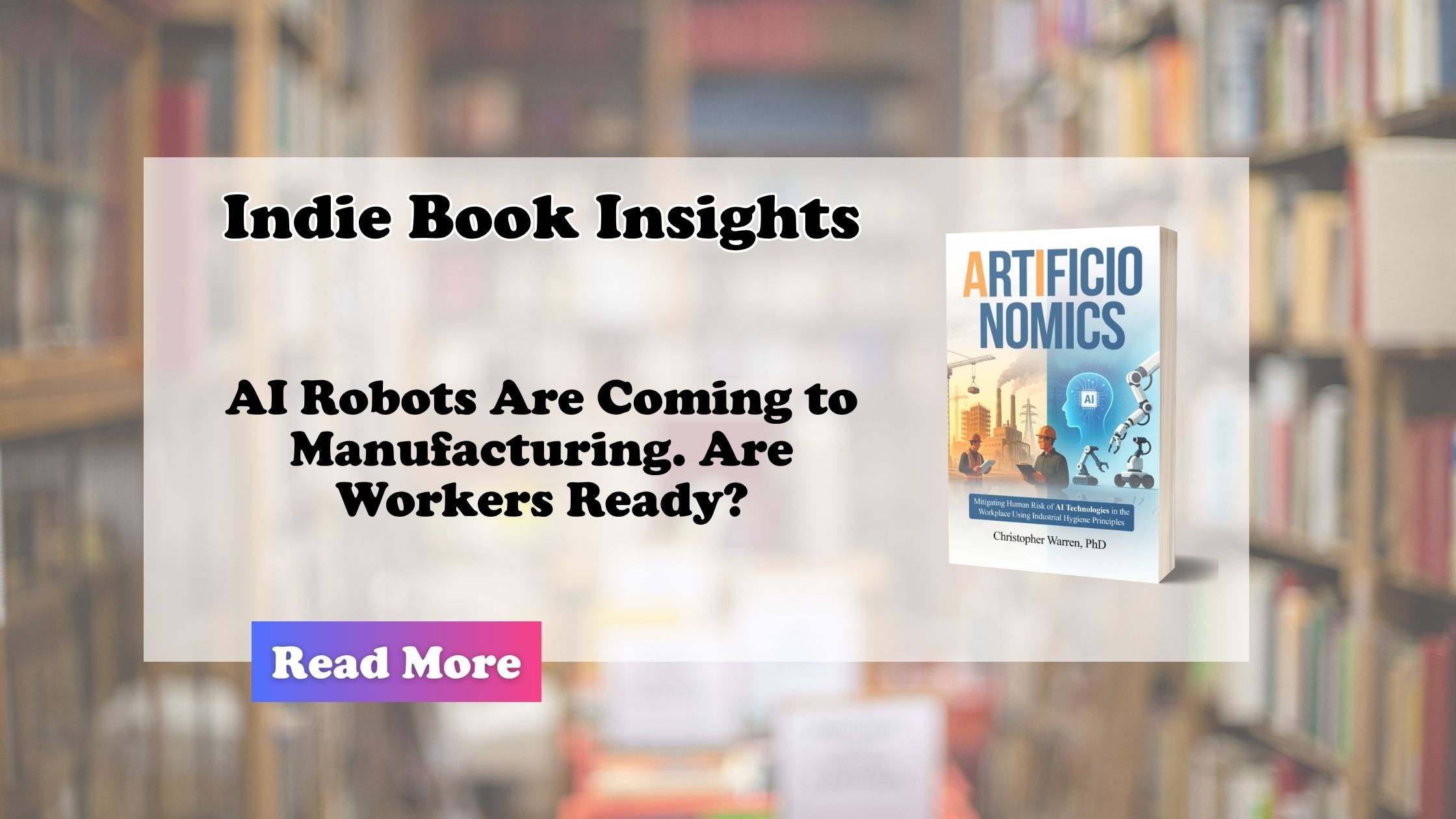
This is precisely why ArtificIonomics represents such a timely and important contribution.
In ArtificIonomics: Mitigating Human Risk of AI Technologies in the Workplace Using Industrial Hygiene Principles, Christopher Warren, PhD, introduces a pioneering framework that applies the proven principles of industrial hygiene to the emerging risks of artificial intelligence and robotics. Rather than viewing AI solely as a productivity tool, the book encourages organizations to recognize AI as a new category of occupational exposure that must be systematically identified, evaluated and controlled.
The framework expands traditional industrial hygiene beyond chemical and physical hazards to include cognitive stress, psychosocial risks, human-robot interaction, AI surveillance, algorithmic bias and the broader impact of automation on worker well-being. It demonstrates how established safety practices such as hazard identification, exposure assessment and the hierarchy of controls can be adapted to protect employees in increasingly automated environments.
For manufacturing leaders, this shift is both practical and strategic. Investing in robotics without preparing the workforce can undermine trust, reduce engagement and create new operational risks. Conversely, organizations that integrate worker training, transparent AI governance, ergonomic system design and continuous risk assessment can unlock the full potential of intelligent automation while strengthening workplace safety and resilience.
The future of manufacturing is not about choosing between people and machines. It is about designing workplaces where both can thrive together.
As AI-powered robots become a permanent part of modern manufacturing, success will no longer be measured solely by production output or operational efficiency. It will also be measured by how effectively organizations protect the people working alongside these technologies.
ArtificIonomics offers a compelling roadmap for that future one where innovation and worker well-being advance together, ensuring that the next industrial revolution remains fundamentally human-centered.