Few political leaders of the twentieth century inspired as much debate, admiration, criticism and scholarly interest as Fidel Castro. For supporters and critics alike, understanding Castro requires more than examining historical events; it requires exploring the ideas that shaped his vision for Cuba and the developing world. Among the most important concepts in his political philosophy were social justice, national sovereignty and independence.
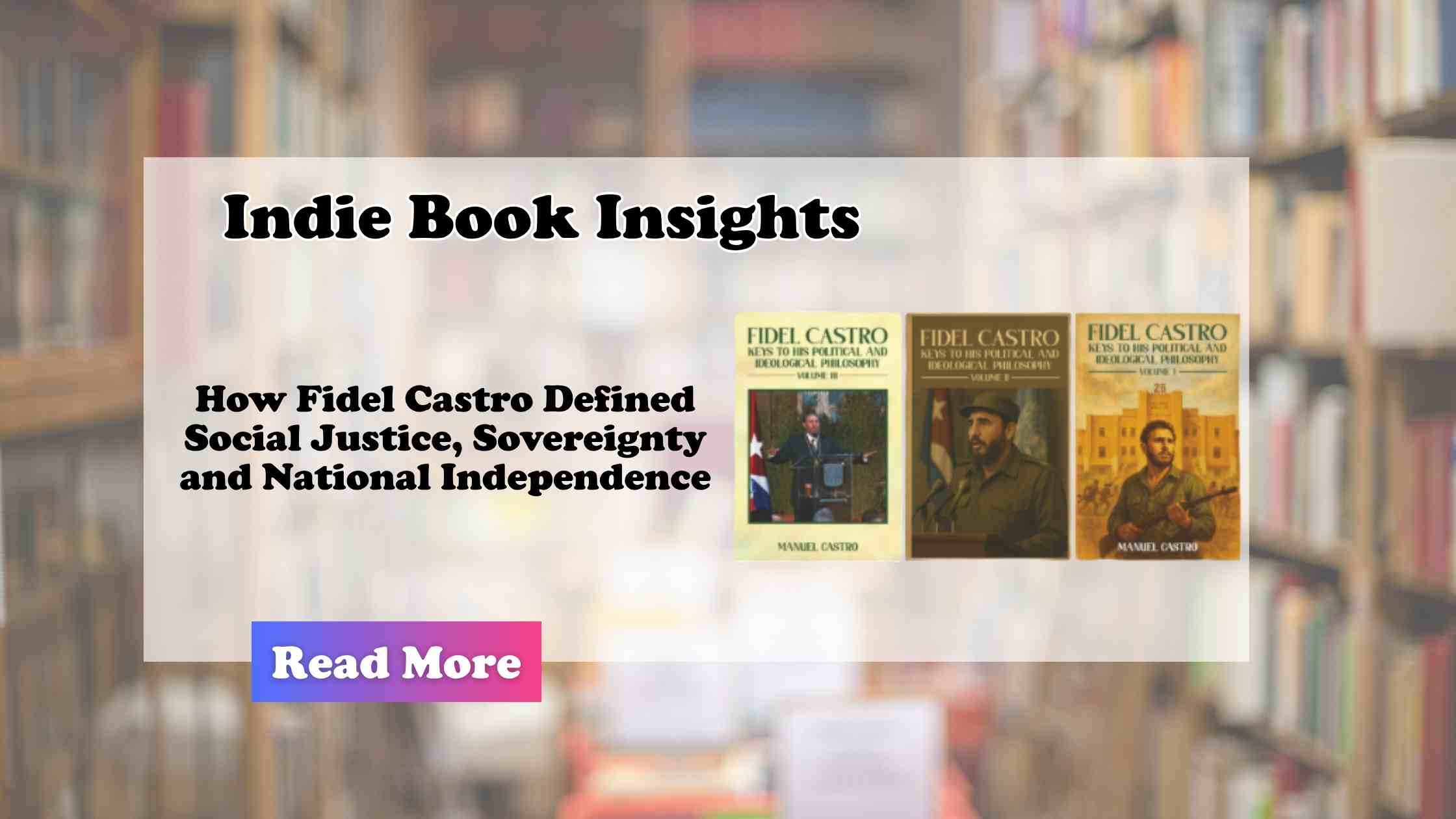
These foundational themes are explored in depth in Fidel Castro: Keys to His Political and Ideological Philosophy (Volumes I, II and III) by Manuel Castro, a comprehensive three-volume work that organizes and analyzes Fidel Castro’s thought through hundreds of key political, social, economic and ideological concepts.
For Fidel Castro, social justice was not simply a political slogan. It was a central objective of the Cuban Revolution. Throughout his speeches and public addresses, Castro repeatedly emphasized the need to address inequality, poverty, illiteracy, inadequate healthcare and social exclusion. He viewed social justice as the responsibility of society to ensure that all citizens had access to education, healthcare, employment opportunities and a dignified standard of living.
This perspective became a defining element of his political discourse. Rather than focusing solely on economic growth, Castro argued that development should be measured by improvements in the lives of ordinary people. In his view, a nation could only progress when its citizens shared in the benefits of that progress.
Equally important to Castro’s philosophy was the concept of sovereignty. He consistently argued that nations must have the right to determine their own political, economic and social systems without external interference. Throughout his leadership, the defense of national sovereignty became a recurring theme in speeches addressing international relations, foreign policy and Cuba’s place in the global community.
For Castro, sovereignty represented more than territorial independence. It was the ability of a people to make decisions about their future according to their own interests, values and aspirations. This principle influenced his positions on international cooperation, anti-colonial movements and the rights of developing nations throughout Latin America, Africa and Asia.
National independence formed the third pillar of Castro’s political philosophy. Drawing inspiration from Cuban independence heroes such as José Martí, Castro viewed the struggle for independence as an ongoing process rather than a single historical event. Political freedom, economic self-determination, cultural identity and national unity were all interconnected elements of true independence.
According to Castro, a nation could not be fully independent if it remained economically dependent or politically vulnerable to outside influence. This belief shaped many of his policies and became one of the most enduring themes in his public speeches over several decades.
For readers seeking a deeper understanding of these ideas, Manuel Castro’s Fidel Castro: Keys to His Political and Ideological Philosophy offers an invaluable resource. Across three extensive volumes, the author systematically examines the concepts, principles and ideological foundations that defined Fidel Castro’s worldview. Organized around hundreds of thematic variables from revolution and socialism to education, culture, sovereignty, internationalism and ethics, the collection provides a unique framework for studying one of the most influential political figures of modern history.
Whether you are a scholar, student, historian or simply interested in political thought, these volumes offer a comprehensive guide to the ideas that shaped Fidel Castro’s vision of social justice, sovereignty and national independence and their continuing relevance in contemporary political discussions.
Discover the framework. Start reading today.
Volume I: https://www.amazon.com/dp/197213454X
Volume II : https://www.amazon.com/dp/1972134558
Volume III : https://www.amazon.com/dp/1972134566