When people begin to question authority itself, rather than individual decisions, that signals a deeper concern. That is true for Britain, especially after the demise of Queen Elizabeth, which has significantly changed the game of power, as something has shifted in Britain: a broader unease about who is in charge and whether those in charge are capable of leading with clarity and purpose.
Trust in Institutions
Authority depends on trust. Parliament passes laws. Courts interpret them. Police enforce them. Civil servants administer them. The system functions when the public believes these bodies act competently and fairly.
In recent years, that confidence has been tested. Brexit divided opinion sharply and left lasting uncertainty. The pandemic brought emergency spending and rushed decisions that are still being examined. Public debate around immigration, crime, and economic strain continues to dominate headlines. Each issue on its own may be manageable. Together, they create an atmosphere of instability.
When decisions appear inconsistent or poorly explained, doubt grows. If sentencing seems uneven or public services appear stretched, people begin to ask whether authority still holds firm. The question is not whether disagreement exists. Disagreement is normal in a democracy. The concern is whether the bond between citizen and institution is weakening.
The Role of Media and Perception
Perception shapes authority as much as action. Continuous exposure to political conflict, policy reversals, and allegations of incompetence can erode public confidence. Social media accelerates this process. Claims spread quickly. Corrections travel more slowly.
This environment makes it difficult for authority to project steadiness. Leaders must not only govern effectively but also communicate clearly and consistently. When communication fails, suspicion fills the gap.
The result is a cycle. Public scepticism increases scrutiny. Increased scrutiny highlights mistakes. Mistakes reinforce scepticism. Over time, authority feels less stable, even if the formal structures remain intact.
Law, Order, and Public Confidence
Crime has become a focal point in debates about authority. Reports of repeat offending, delays in court cases, and pressure on policing resources contribute to public frustration. When people feel unsafe or unheard, they question whether the state is fulfilling its basic responsibilities.
Authority is strongest when it is predictable. If rules are applied unevenly or appear unclear, confidence declines. Once that decline begins, rebuilding trust requires more than promises. It requires visible consistency and accountability.
Is It a Crisis?
The word “crisis” suggests collapse. And in the context of Britain’s current landscape, it has not reached that point yet. But that does not mean that the sense of strain is unreal, as a crisis of authority does not begin with chaos, but doubt. When citizens quietly wonder whether leadership is effective or whether institutions serve the public interest, authority is under pressure.
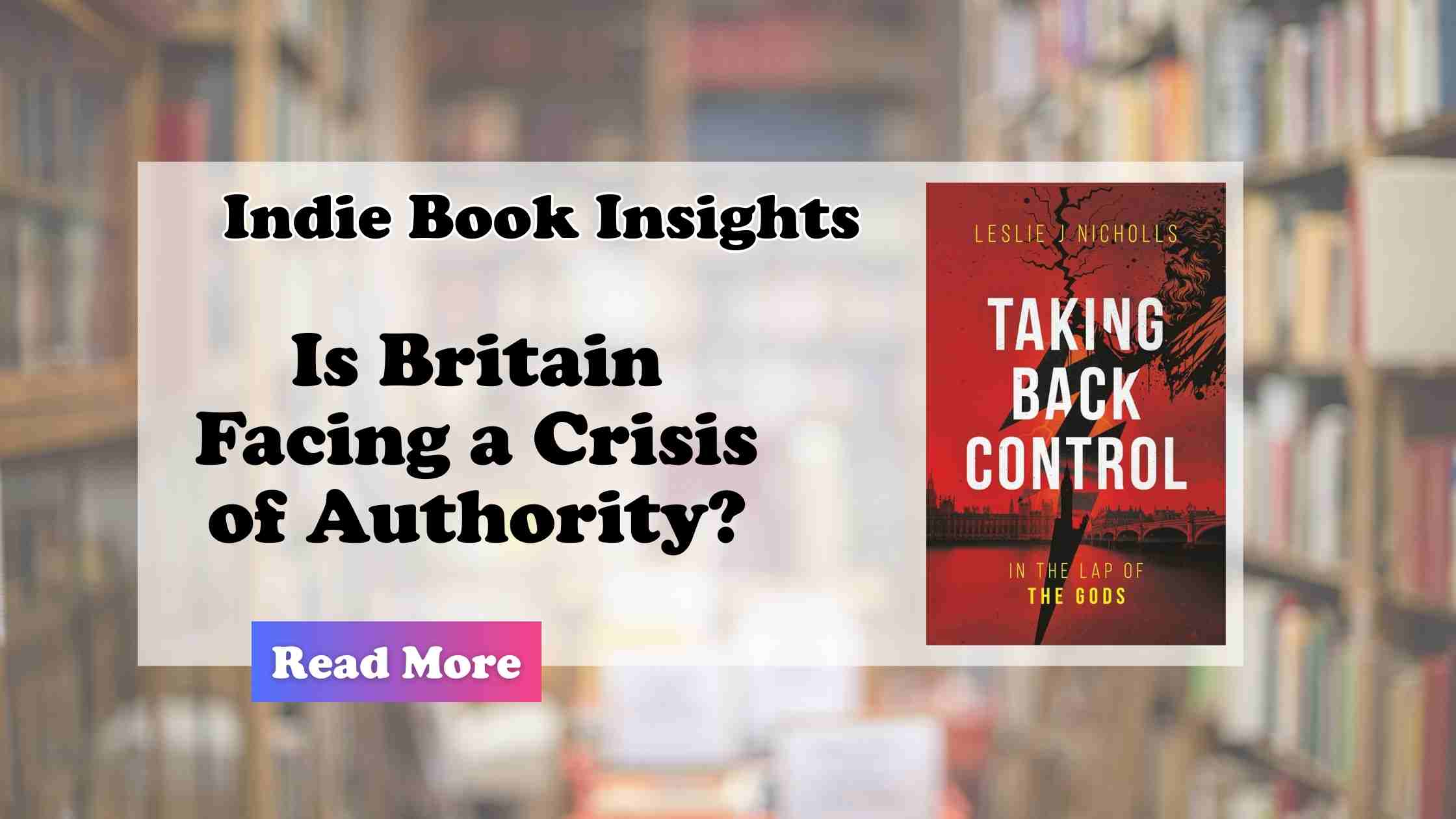
This theme sits at the centre of Leslie J Nicholls’ political thriller Taking Back Control: Lap Of The Gods. The novel explores what happens when frustration with governance evolves into organised action. Through its rich story and political context around Braitan, the book asks how far public dissatisfaction can stretch before alternative forms of authority begin to emerge.
Nicholls has been associated with what readers describe as a Nostradamus effect. In earlier works within the series, developments in British politics appeared to echo themes he had already explored in fiction. That reputation adds a layer of relevance to this latest installment.
To understand the full context, it is worth reading the series in order. This Disunited Kingdom lays the groundwork. The Serpents’ Manifesto deepens the critique of institutions. Into the Sunset extends the narrative arc. Finally, Taking Back Control brings those tensions to a sharper point.
If the question of authority in modern Britain concerns you, this series offers a fictional lens through which to consider it carefully. It does not offer easy solutions. It invites reflection.
Head to Amazon to purchase your copy: https://www.amazon.com/dp/B0G4F2KTJC