
As technology advances at an astonishing pace, humanity faces questions that once belonged only to science fiction. What happens if memories can be stored digitally? Can consciousness survive beyond the human body? If machines become extensions of ourselves, where does humanity end and technology begin?
These are the questions explored in Robot Head, the thought-provoking poetry collection by Robert Antrim Calwell.
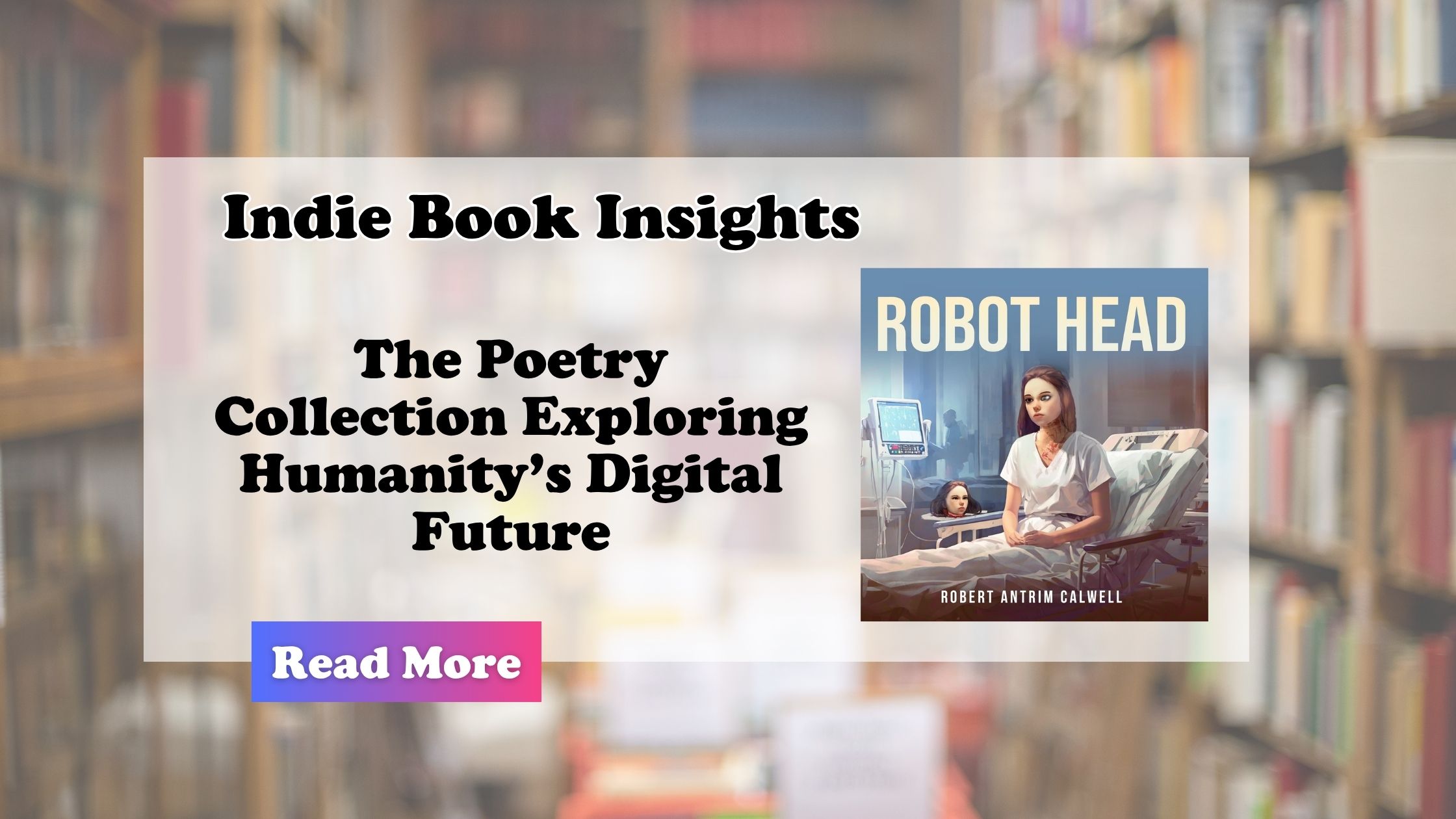
Blending poetry, storytelling, spirituality and futuristic imagination, Robot Head takes readers on a remarkable journey through the mind of Tiara, a young woman whose life changes forever after a devastating personal crisis. Following an experimental procedure that replaces her head with a robotic counterpart, Tiara embarks on an odyssey that challenges everything we think we know about identity, memory and the soul.
While many books about artificial intelligence focus on machines becoming human, Robot Head asks a more intriguing question: What happens when humanity becomes part machine?
At its heart, the collection is deeply human. The story begins with emotional vulnerability and the struggle to find meaning in moments of despair. In one of the book’s opening poems, Calwell writes:
“I may be lost within my mind,
Turned inside out and mostly blind.
Where up is down of what may be,
I’ll write a note to set me free.”
These haunting lines establish the emotional foundation of the book. Readers are immediately immersed in a world where pain, hope and self-discovery coexist.
As the narrative evolves, technology emerges not as a villain but as a tool that forces difficult philosophical questions. If memories define us, should painful memories be erased? Can happiness exist without sorrow? Is the soul something biological or something greater?
The collection repeatedly returns to these themes through lyrical imagery that combines circuits and spirituality, science and faith.
One of the most striking examples appears in the poem “Robot Head Surgery”:
“They cut my body from my mind,
What may follow they promise kind.
My nerves to stitch the doctors say,
We’ll meet again, and then someday.”
The poem captures both the wonder and uncertainty of a future where technology can reshape human existence.
Yet Robot Head never loses sight of hope. Even amid questions about artificial intelligence and consciousness, the collection remains rooted in optimism and personal growth. Tiara’s journey becomes a search for purpose rather than perfection.
This hopeful perspective shines in another memorable passage:
“All my dreams and every prayer,
Are coming true I won’t despair.
Numbers painted on morning’s sky,
As photos found in my pixel eye.”
Here, digital imagery and spiritual aspiration merge seamlessly, creating a poetic vision of a future where technology enhances rather than replaces our humanity.
What makes Robot Head especially relevant today is its ability to explore modern technological anxieties through an emotional and deeply personal lens. Instead of focusing solely on innovation, Robert Antrim Calwell examines how emerging technologies may affect our relationships, memories, beliefs and understanding of self.
For readers who enjoy poetry that challenges conventional thinking while remaining accessible and emotionally resonant, Robot Head offers a unique experience. It is a collection for dreamers fascinated by the future, thinkers interested in philosophy and anyone curious about what it truly means to be human in an increasingly digital world.
As humanity moves toward an uncertain technological future, Robot Head reminds us that our greatest questions have never been about machines; they have always been about ourselves.