

Artificial intelligence and automation have fundamentally rewritten the rules of modern cybersecurity. With new and updated features and sometimes unrealistic developments, it has shifted the paradigm of Security Information and Event Management (SIEM) from a passive archive of log files into an active, cognitive defense engine. For decades, traditional SIEM platforms relied strictly on static correlation rules and manual analysis. They drown security operations center (SOC) analysts in a relentless sea of noise, false positives, and unmanageable alert volumes. But today, with modern integration and the increasing use of AI, the integration of advanced machine learning, behavioral analytics, and automated response workflows is transforming it into a self-optimizing system capable of meeting threats at machine speed.
Where traditional rule-based engines often fail when confronted with zero-day attacks or stealthy, multi-stage campaigns that do not match existing signatures, by introducing machine learning models and User and Entity Behavior Analytics (UEBA), modern AI-driven SIEM platforms continuously map baseline behaviors across users, devices, and cloud workloads. When an adversary uses stolen legitimate credentials to move laterally or execute living-off-the-land techniques, the system can detect subtle deviations from normal patterns instantly. As a result, it helps cybersecurity professionals expose threats that would otherwise remain invisible beneath routine background activity.
Beyond detection, automation within the AI SIEM ecosystem solves one of the industry’s most persistent crises: alert fatigue and resource drain. Security professionals frequently struggle with risk prioritization, spending countless hours manually triaging low-fidelity alerts. AI-powered platforms dynamically score and prioritize alerts based on threat intelligence context, asset importance, and behavioral risk likelihood. When a high-confidence threat is validated, automated playbooks can instantly trigger containment measures, such as isolating compromised endpoints, disabling compromised user accounts, or blocking malicious indicators—drastically shrinking the attacker’s dwell time.
Furthermore, the introduction of generative AI and natural-language interfaces acts as an unprecedented force multiplier for analysts. Instead of writing complex query languages from scratch or spending hours piecing together fragmented logs, analysts can leverage natural-language queries to summarize complex incidents, generate comprehensive reports, and receive real-time contextual recommendations. This democratization of data analysis empowers junior analysts to tackle sophisticated investigations while freeing senior security practitioners to focus on proactive threat hunting and defensive architecture.
Ultimately, the marriage of SIEM and AI automation represents a decisive turning point in enterprise defense. By combining the massive data aggregation power of traditional SIEM with the adaptive, predictive capabilities of artificial intelligence, organizations can move past the exhausting cycle of reactive firefighting. Still, we see that many organizations and security professionals fall back on old practices and fail to understand the importance of SIEM.
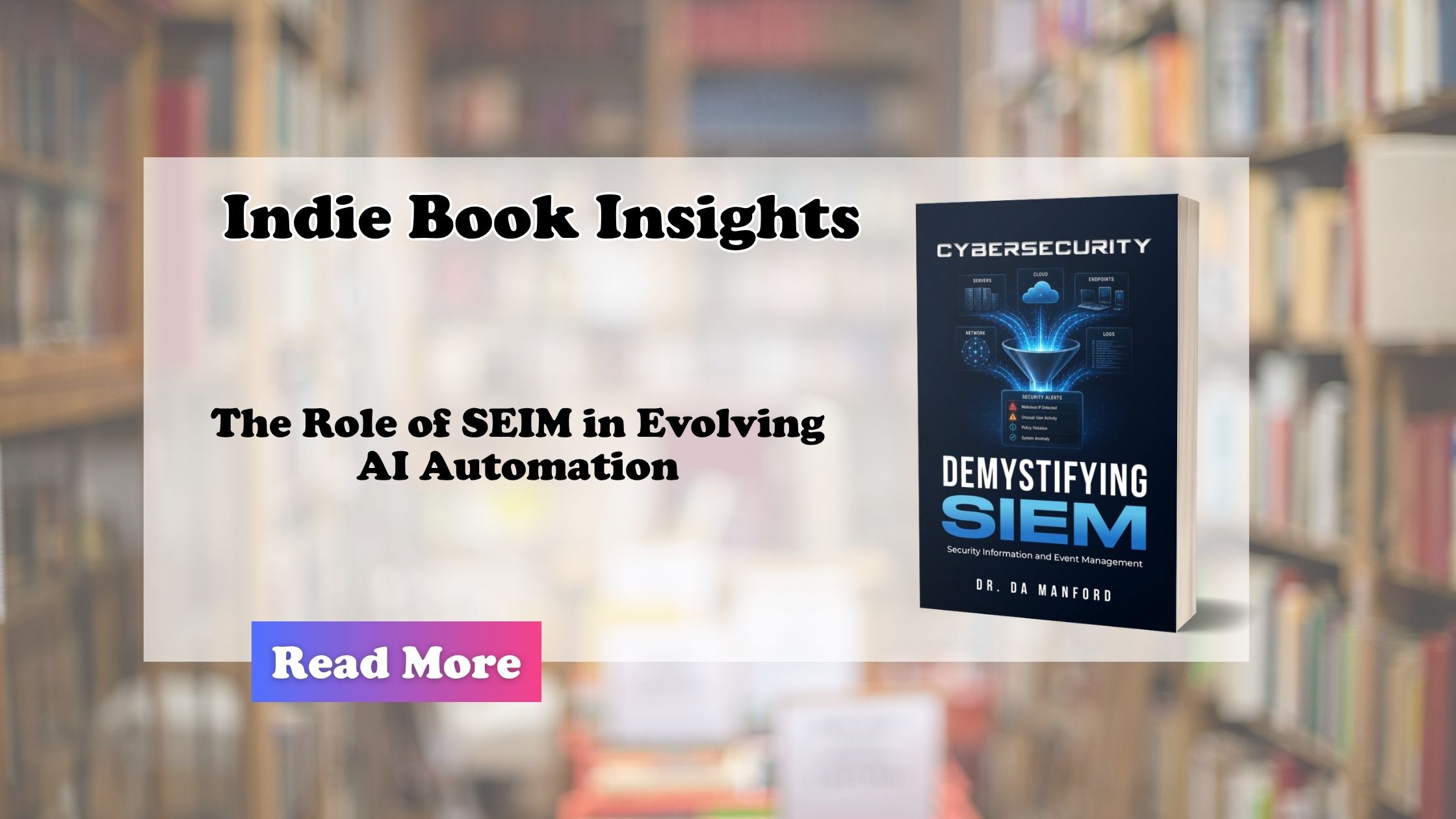
In this regard, Demystifying SIEM: Security Information and Event Management by Dr David A. Manford is a practical guide that explains the principles, architecture, and operational value of Security Information and Event Management in modern cybersecurity. The book explores how SIEM platforms collect, normalise, and analyse security data to provide visibility, detect threats, support incident response, and strengthen security operations. It also covers essential topics including security data management, threat detection, log collection, correlation and analytics, SOC workflows, SIEM deployment strategies, tuning and optimisation, common challenges, and the evolving relationship between SIEM, SOAR, XDR, cloud security, and artificial intelligence.
Written for security professionals, leaders, students, and those entering the cybersecurity field, it provides a clear foundation for understanding how organisations can implement and maximise SIEM to improve resilience against modern cyber threats and looming security threats.
Read the book on Amazon: https://a.co/d/09kt91XG