

Most leadership conversations focus on influence, vision, and personal impact. Far fewer focus on what remains after a leader moves on. However, this question matters more than any speech or plan. When leadership becomes stewardship, the focus shifts from personal success to institutional endurance. Results change because responsibility deepens.
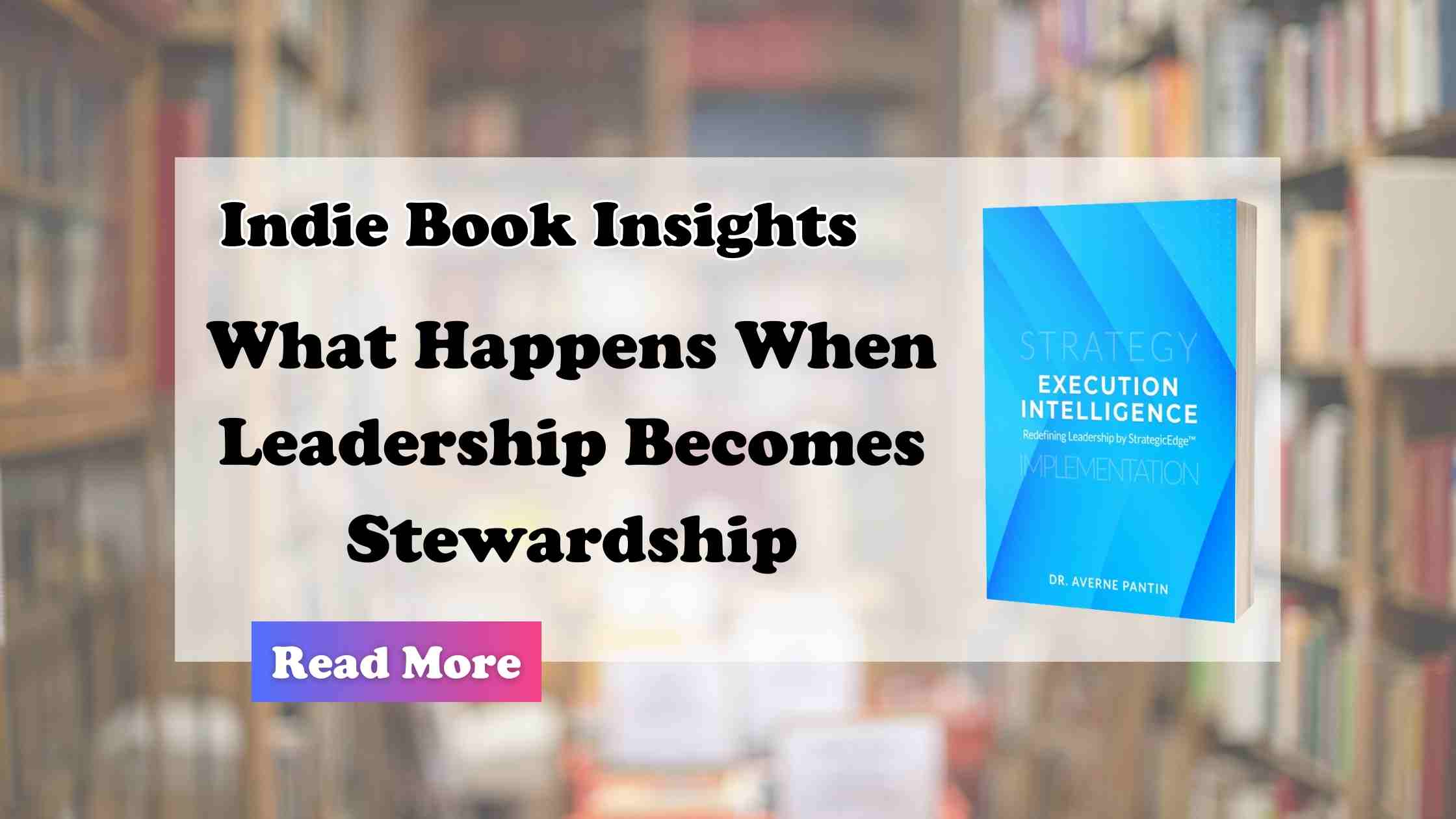
Stewardship asks leaders to care for something they will not fully own and may not fully benefit from. It requires protecting systems, people, and priorities beyond individual tenure. This approach is at the core of Execution Intelligence: Redefining Leadership by Strategic Edge by Dr. Averne Pantin, which frames leadership as custodianship rather than performance.
Stewardship Changes How Decisions Are Made
When leaders view themselves as stewards, decisions proceed in the right way. Choices are tested against their long-term impact rather than their short-term visibility. Leaders ask whether a decision strengthens the institution or simply advances a personal agenda.
For example, in a public organization facing pressure to announce rapid reform, a stewardship minded leader may resist launching multiple initiatives at once. Instead, they prioritize a smaller set of tasks and ensure they are completed fully. The result is less noise and more trust. People begin to believe that work will not be abandoned midstream.
Continuity Becomes a Leadership Obligation
Traditional leadership often treats continuity as optional. When leaders change, direction changes. Stewardship rejects this pattern. It treats continuity as a responsibility that must be guarded.
In a manufacturing firm, a stewardship approach means maintaining production discipline even during leadership transitions. Maintenance schedules, quality reviews, and decision cycles continue without disruption. When continuity holds, performance stabilizes. When it breaks, problems surface quickly. Stewardship ensures that systems outlast individuals.
Dr. Pantin emphasizes that execution continuity is not a technical issue. It is a leadership choice. Institutions that protect continuity build credibility with employees, partners, and markets.
Ethics Move From Words to Practice
Stewardship also reshapes ethics. Ethics are no longer abstract values displayed in statements. They become visible through behavior. Leaders who abandon strategies without closure or reset priorities without explanation erode trust. Those who protect effort and follow through demonstrate respect.
A logistics organization offers a clear example. When leadership commits to improving service reliability and sustains the execution rhythm over time, staff see that promises matter. When leadership changes but priorities remain intact, confidence grows. Ethics become tangible through consistency.
Institutions Become More Resilient
When leadership becomes stewardship, institutions gain resilience. They absorb shocks without losing direction. They adjust without resetting everything. People stay engaged because they see effort lead to outcomes.
This future facing picture of leadership is grounded in custodianship, ethics, and institutional endurance. It shifts leadership from being about presence to being about legacy. Success is measured by what continues to work, not by what was announced.
Why This Shift Matters Now
Volatile environments demand leadership that can sustain execution under pressure. Stewardship provides that foundation. It recognizes that institutions serve many people and outlast individual roles.
For readers interested in exploring this shift more deeply, Execution Intelligence: Redefining Leadership by Strategic Edge by Dr. Averne Pantin offers a clear and practical framework for leadership grounded in stewardship rather than spectacle.
Read this book, available on Amazon: https://www.amazon.com/dp/B0G4XT49LS/.